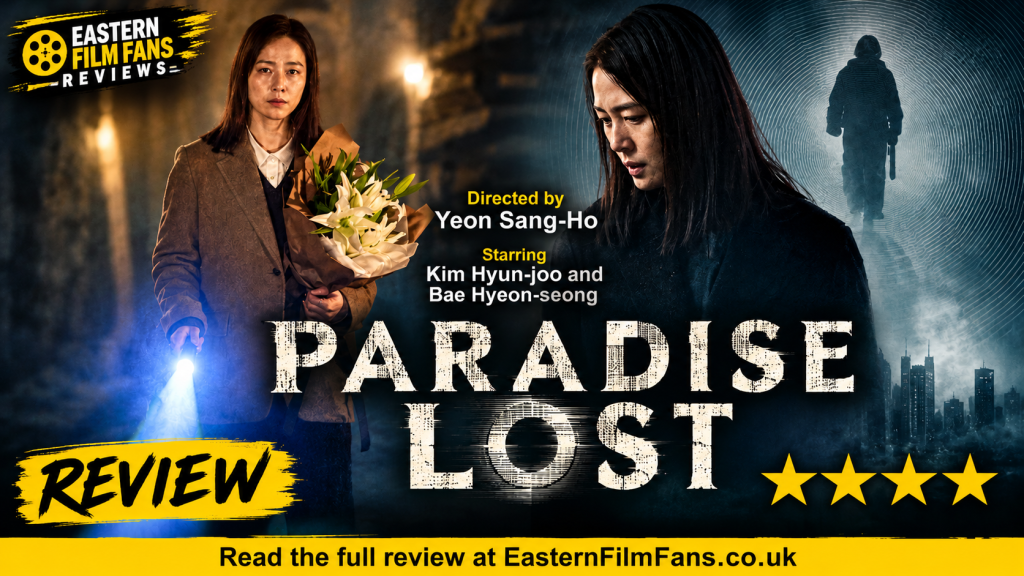
Yeon Sang-ho is a filmmaker who has never been afraid to explore the darker corners of human nature. Whether it is the relentless zombie chaos of Train to Busan, the supernatural mystery of The Cursed or the disturbing world of Hellbound, he has built a reputation for taking familiar ideas and giving them a much darker, often thought-provoking twist.
With Paradise Lost, however, he takes a different direction, delivering a psychological thriller that explores grief, motherhood and the increasingly complicated relationship between humans and artificial intelligence. There are no hordes of zombies here, but that doesn’t mean the film lacks unsettling moments. In fact, some of its most disturbing ideas come from something that is becoming increasingly familiar in our everyday lives: technology.
The Story
Nine years ago, Ryu So-young (Kim Hyun-joo) experienced every parent’s worst nightmare when her young son, Sun-woo, disappeared along with twelve other children after their school camping trip bus vanished without a trace.
The discovery of the abandoned bus and the subsequent investigation brought little comfort. Several children were eventually found dead, but Sun-woo remained missing, leaving So-young trapped in an agonising state of uncertainty, never knowing whether her son was alive or dead.
Desperate to find some way of coping with her loss, So-young turns to a new artificial intelligence programme called Children of Paradise. Using augmented reality technology, the system recreates a virtual version of her missing son as a young boy, allowing her to interact with him and maintain something resembling their former relationship.
For nine years, this virtual reunion becomes an important part of her everyday life. Then something extraordinary happens.
Sun-woo (Bae Hyeon-seong) suddenly returns, alive and now a young adult. However, this isn’t the happy reunion So-young might have imagined. The young man standing before her is covered in scars, has a cold and unsettling personality, and bears little resemblance to the innocent child she has spent nearly a decade interacting with through the AI programme.
Suddenly, So-young finds herself facing an impossible emotional situation. She has her real son back, but the virtual version is the child she has come to know and love over the years.
As the mystery surrounding Sun-woo’s disappearance begins to unravel, the relationship between mother and son becomes increasingly complicated, with some uncomfortable truths waiting to surface.
A Different Kind of Yeon Sang-ho Film
One of the most interesting aspects of Paradise Lost is the way Yeon Sang-ho approaches its subject matter.
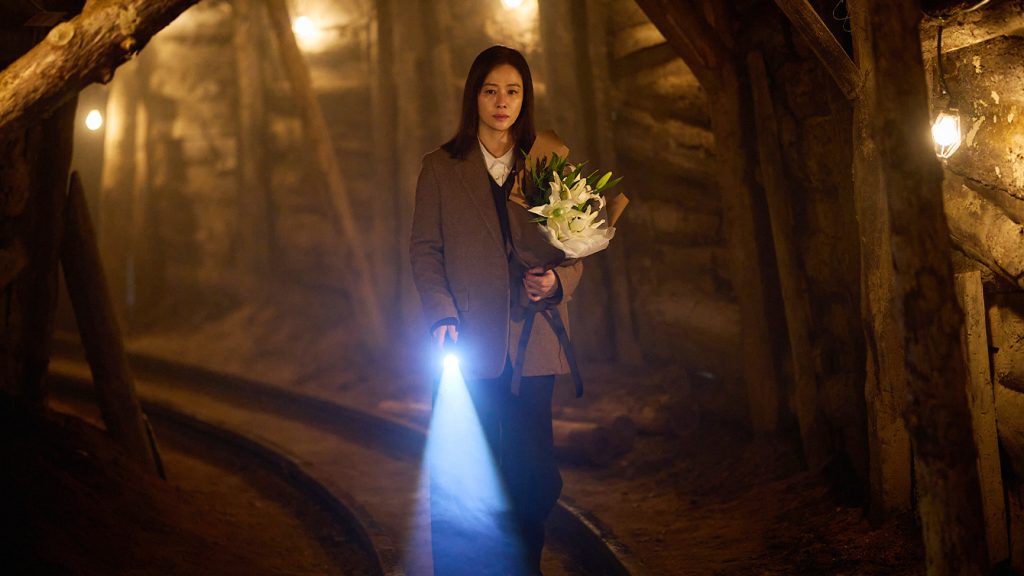
Anyone expecting another full-on genre spectacle might be surprised by the more restrained approach. This is a film that relies on atmosphere, psychological tension and the emotional conflict between its characters rather than constant action or elaborate set-pieces.
The premise is fascinating because it takes a technology that initially appears to offer comfort to grieving parents and turns it into something far more complicated.
The Children of Paradise programme is effectively allowing parents to keep a version of their missing children alive in their everyday lives. But what happens when that virtual representation becomes more familiar than the actual person? And what happens when the real person eventually returns?
These are the questions that give the film its strongest material.
There is also something particularly uncomfortable about watching So-young struggle to reconnect with the son she has spent nine years mourning. The virtual Sun-woo is forever the innocent young boy she remembers, whereas the real Sun-woo has grown up, experienced things she knows nothing about and become someone she struggles to recognise.
It is a clever way of exploring the difference between memory and reality, and how grief can sometimes prevent us from accepting the truth.
Performances
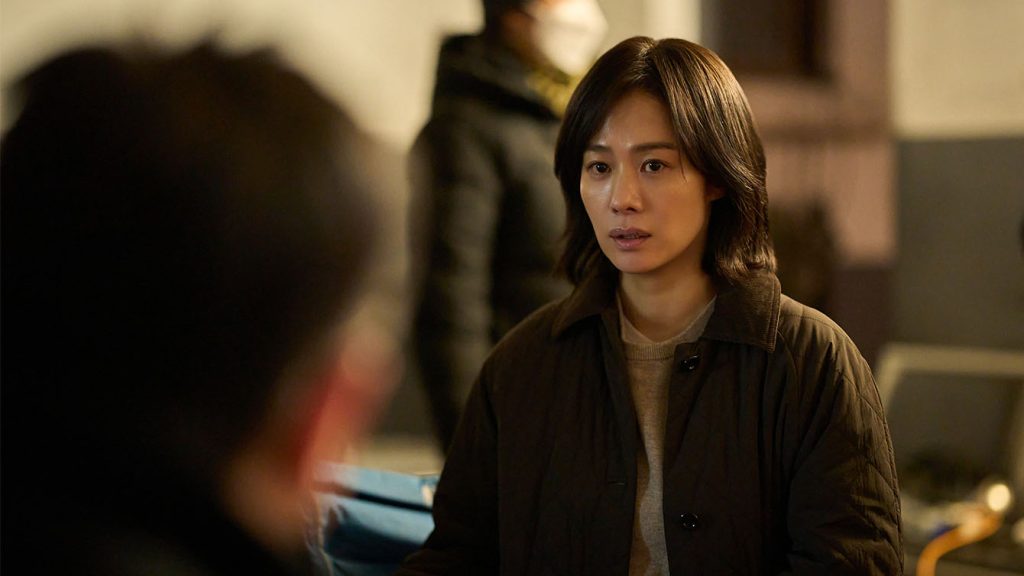
Kim Hyun-joo is the emotional centre of the film as So-young, delivering a performance that requires her to balance the overwhelming love of a mother with the confusion and fear of someone whose carefully constructed world is suddenly falling apart.
She has previously worked with Yeon Sang-ho on The Cursed and Hellbound, and their familiarity clearly makes this another interesting collaboration. She brings a convincing vulnerability to the role, particularly when So-young is forced to confront the fact that the child she has kept alive in her memories may no longer exist in the way she wants to believe.
Bae Hyeon-seong is equally important as the returned Sun-woo. Rather than playing the character as a straightforward reunion figure, he brings an unsettling quality to the role. There is a distance between him and his mother that becomes increasingly difficult to ignore, and his performance keeps the audience questioning exactly what has happened during those missing nine years.
The contrast between the two performances is central to the film. Kim gives us a mother desperately trying to hold on to something she has lost, while Bae represents the uncomfortable reality that the person returning home is no longer the child she remembers.
Technology, Grief and the Human Condition
What makes Paradise Lost more than just another missing-child mystery is its exploration of artificial intelligence.
The film raises some genuinely interesting questions about how far technology should go when dealing with something as personal as grief. We are already living in a world where artificial intelligence can recreate voices, images and personalities, so the idea of interacting with a digital version of someone we have lost doesn’t feel quite as far-fetched as it once might have.
But can a computer programme really replace human connection?
And if the virtual version of someone becomes an important part of your life, does deleting that programme feel like losing that person all over again?
These are uncomfortable questions, and Yeon Sang-ho clearly wants the audience to think about them beyond the immediate events of the story.
The film also explores the expectations we place on the people we love. So-young has spent nine years preserving an idealised version of her son, but the real Sun-woo doesn’t fit that picture. There is a painful distinction between loving the memory of someone and accepting who they have become.
I particularly like the potential of this central idea because it gives the film an emotional foundation that extends beyond its mystery-thriller elements.
Final Thoughts
Paradise Lost is another interesting addition to Yeon Sang-ho’s filmography, demonstrating that he is just as comfortable exploring psychological and emotional horror as he is delivering the zombie thrills of Train to Busan.
The central concept is genuinely thought-provoking, and the combination of a missing-child mystery with artificial intelligence gives the film plenty of material to explore. Kim Hyun-joo provides a strong emotional performance, while Bae Hyeon-seong adds an unsettling presence that keeps the relationship between the characters interesting.
However, the film isn’t without its shortcomings. Some of the ideas introduced are stronger than the way they are ultimately developed, and there are moments when the narrative struggles to balance its emotional themes with the mechanics of the mystery. I would have liked certain aspects of the AI concept and the psychological consequences to have been explored in greater depth.
Nevertheless, there is plenty to appreciate here. Yeon Sang-ho has once again taken a relatively simple premise and used it to explore some much bigger questions about humanity, identity and the things we do when faced with unbearable loss.
It might not deliver the explosive genre entertainment of Train to Busan, but Paradise Lost offers something rather different: an unsettling Korean thriller that stays with you because of the questions it raises.
For fans of Yeon Sang-ho, Korean psychological thrillers and science fiction that explores the darker side of technology, this is certainly one worth investigating.
