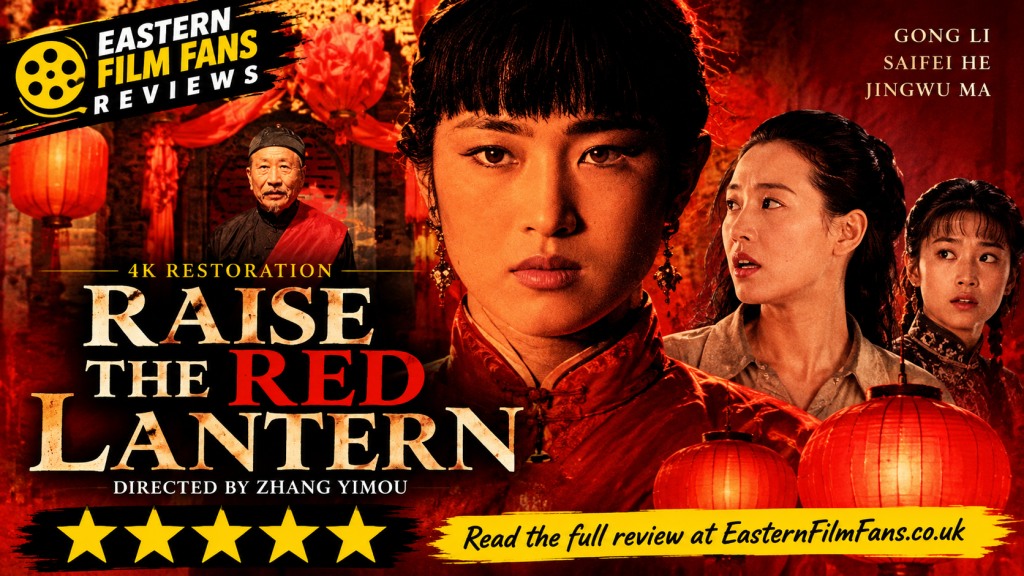
There are films that entertain, films that stay with you long after the closing credits, and then there are films like Raise the Red Lantern. Originally released in 1991, Zhang Yimou’s extraordinary period drama remains one of the most visually beautiful, emotionally unsettling and powerful pieces of Chinese cinema. Now, with a stunning new 4K restoration, audiences have another opportunity to experience this landmark film, and what a pleasure it is to see it given the attention it deserves.
For anyone who has never experienced Raise the Red Lantern, this is a film that deserves your attention. For those who have seen it before, the new restoration offers an excellent reason to revisit it.
The Story
Set in 1920s China, the story follows nineteen-year-old Songlian (Gong Li), a university student whose circumstances change dramatically following the death of her father. With her family struggling financially, she is forced to abandon her education and marry into a wealthy household, becoming the newest concubine of the powerful Master Chen (Ma Jingwu).
However, life inside the Chen household is far from the comfortable existence she might have imagined. Master Chen has three other wives, each occupying their own separate quarters within the enormous family compound. What initially appears to be a life of luxury soon reveals itself to be a tightly controlled world of jealousy, manipulation and competition.
The household operates under a particularly cruel tradition. Each evening, red lanterns are lit outside the chambers of the wife whom Master Chen chooses to spend the night with. This seemingly simple ritual brings privileges, attention and status to the chosen woman, while the others are left feeling unwanted and increasingly desperate.
Songlian initially attempts to maintain some independence, but she soon discovers that surviving within this household means understanding its rules and, eventually, becoming part of the very games she once despised.
As rivalries intensify and secrets begin to emerge, the consequences become increasingly devastating.
Zhang Yimou – A Director at the Height of His Powers
One of the most remarkable things about Raise the Red Lantern is just how much Zhang Yimou manages to communicate through his direction without needing to rely on excessive dialogue or dramatic exposition.
Known internationally for films such as Hero, House of Flying Daggers, To Live and Red Sorghum, Zhang has always had an incredible eye for composition, colour and visual storytelling. However, there is something particularly special about the controlled filmmaking on display here.
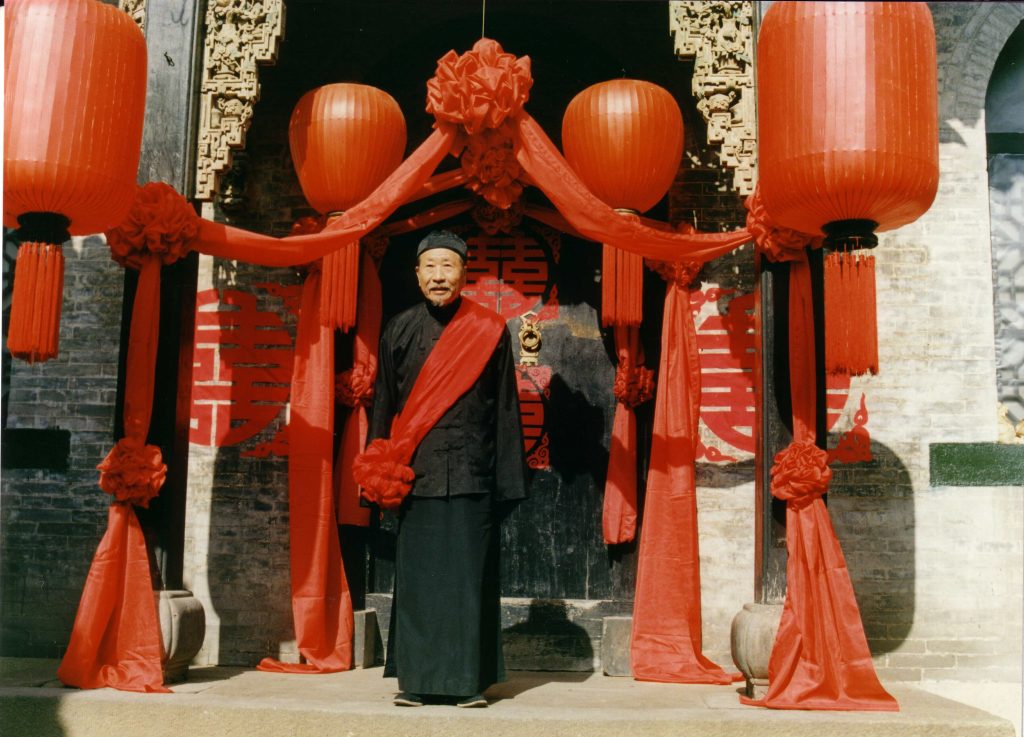
The Chen household becomes almost a character in its own right. Its enormous courtyards, imposing architecture, long corridors and enclosed living spaces create an atmosphere that is both beautiful and deeply oppressive.
Zhang uses symmetry and carefully constructed compositions to show how little freedom these women actually possess. They might occupy beautiful surroundings, wear elaborate costumes and enjoy certain privileges, but ultimately their lives are controlled by a man whose presence is felt throughout the film, even when he isn’t on screen.
In fact, the decision to keep Master Chen largely unseen is an inspired one. His authority dominates everything, and we don’t need to see him constantly to understand the power he holds over the household.
Then there is the use of colour.
The red lanterns are obviously central to the film’s imagery, but their meaning develops throughout the story. Initially representing attention, privilege and desire, they gradually become symbols of competition, control and the destructive nature of the household’s traditions.
The contrast between the vibrant reds, the colder stone architecture and the muted surroundings is magnificent. Zhang understands that sometimes a single image can communicate more than an entire conversation.
There is a wonderful confidence to his filmmaking here. He allows scenes to breathe, lets the tension build naturally and trusts his audience to understand the complicated relationships developing between the characters.
This isn’t a film that rushes towards its conclusion. Instead, it slowly draws you into its world, making the eventual tragedy all the more affecting.
Gong Li – An Extraordinary Performance
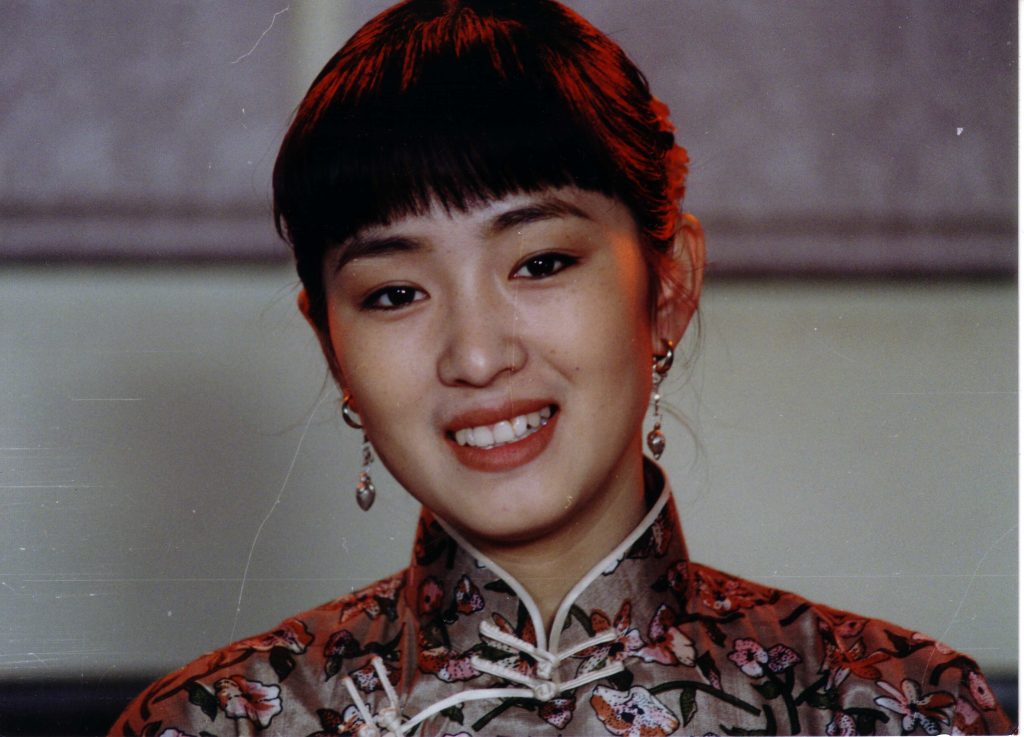
At the heart of everything is Gong Li, and what a performance she delivers as Songlian.
Gong Li has become one of the most recognisable and respected actresses in international cinema, and her collaborations with Zhang Yimou helped establish her as a major screen presence. Their partnership has produced some exceptional work, but Raise the Red Lantern remains one of their defining achievements.
What makes her performance so impressive is the way she allows us to see Songlian gradually change.
When we first meet her, she is an educated young woman who has already lost much of her independence. There is a defiance about her, a determination not to surrender completely to the circumstances in which she finds herself.
However, as she becomes increasingly involved in the household’s rivalries, we see that determination slowly challenged.
Gong Li communicates so much through her expressions, particularly her eyes. There are moments when she barely needs to say anything because we can see exactly what is going through her mind. Her frustration, jealousy, loneliness and eventual emotional deterioration are conveyed with extraordinary subtlety.
She also makes Songlian a complicated character. We sympathise with her situation, but we also see her making decisions that contribute to the suffering of those around her. She isn’t simply an innocent victim, and that complexity makes the performance even more compelling.
It is a beautifully controlled piece of acting, and one of the reasons the film remains so powerful more than three decades later.
Lorem ipsum dolor sit amet, consectetur adipiscing elit. Ut elit tellus, luctus nec ullamcorper mattis, pulvinar dapibus leo.
A Wonderful Supporting Cast
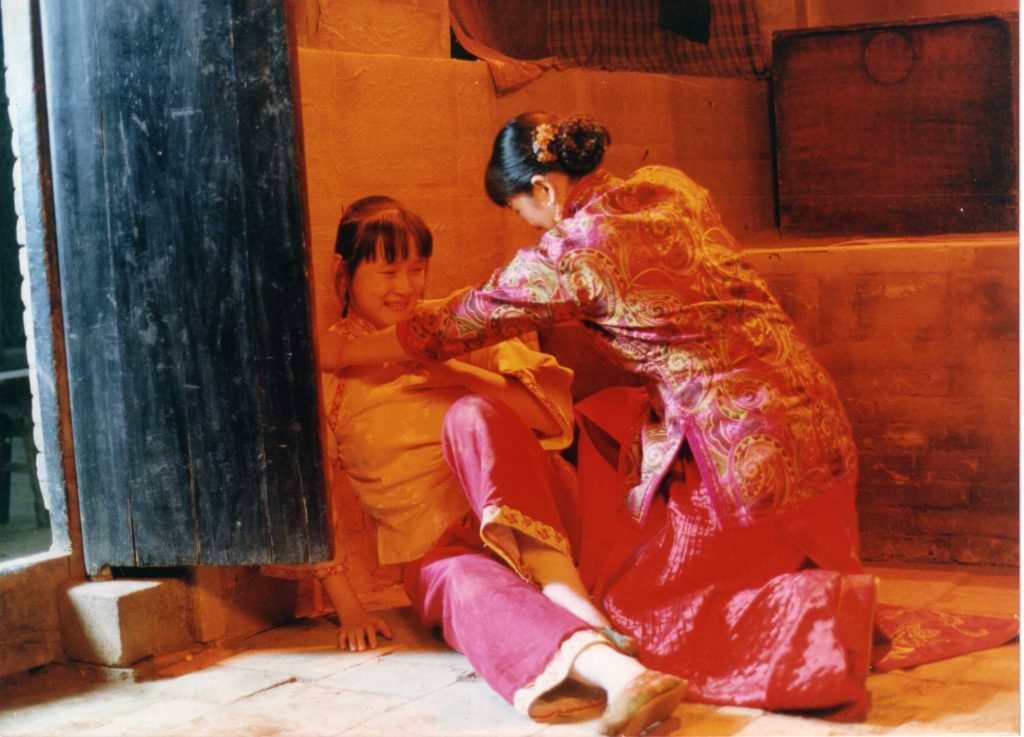
Although Gong Li understandably takes centre stage, the supporting performances are equally important in bringing this world to life.
He Saifei plays Meishan, the third wife, a former opera singer whose more outgoing personality initially makes her appear rather different from the other women. However, beneath that exterior is someone who understands the household’s rules and the dangers of challenging them.
Cao Cuifen is equally effective as Zhuoyun, the second wife. She is perhaps the most calculating of the women, understanding how to manipulate situations and use the household’s traditions to her advantage.
Jin Shuyuan plays Yuru, the first wife, whose position in the family is rather different. She has been there long enough to understand that affection and status are not necessarily the same thing, and her relationship with the other women is particularly interesting.
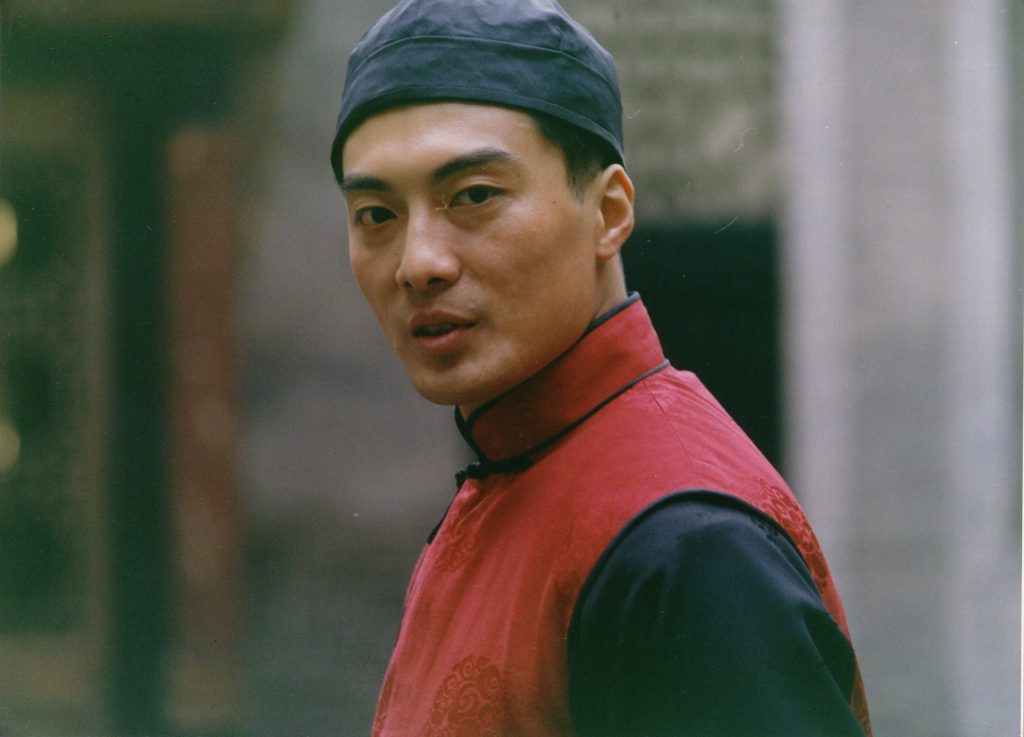
Ma Jingwu also deserves recognition as Master Chen. Although the character remains largely unseen, his influence is everywhere. His decisions determine the women’s daily lives, and the performance creates a powerful sense of authority without requiring him to dominate every scene.
Together, the cast creates a convincing picture of a household where nobody can truly trust anybody else.
The New 4K Restoration
For this latest presentation, the real talking point is undoubtedly the restoration.
Raise the Red Lantern has always been a visually extraordinary film, but a new restoration provides an opportunity to appreciate just how much detail went into its original production.
The restoration was undertaken by the Udine Far East Film Festival for its 26th edition, using the original image and sound negatives under the supervision of Zhang Yimou himself.
Completed in 2024 at L’Immagine Ritrovata in Hong Kong and Bologna, the restoration also used a vintage positive print from the film’s 1991 Venice International Film Festival presentation as a reference for the colour grading.
That last detail is particularly important for a film where colour plays such an essential part in the storytelling.
The reds are central to the entire visual identity of Raise the Red Lantern, and preserving the intended appearance of those colours is crucial. The elaborate costumes, intricate set details, architectural textures and carefully composed interiors all benefit from the renewed attention given to the original elements.
The cinematography by Zhao Fei and Yang Lun is another reason this restoration is so worthwhile. The compositions are incredibly precise, and the film’s use of space and lighting remains beautiful.
What I particularly appreciate is that the restoration allows the original photographic qualities of the film to shine rather than making it feel like something artificially modernised.
This is exactly what you want from a restoration of a film of this importance. It should preserve the director’s original intentions while allowing a new generation of viewers to appreciate the craftsmanship involved.
Final Thoughts
Raise the Red Lantern is one of those films that reminds you just how powerful cinema can be when every element comes together.
Zhang Yimou’s direction is exceptional, the cinematography is beautiful, the supporting cast delivers some wonderful performances, and Gong Li is simply magnificent. Her portrayal of Songlian gives the film its emotional centre, taking us on a journey from youthful defiance to a deeply unsettling conclusion.
It is also a film that has lost none of its relevance. Its examination of power, manipulation, jealousy, the treatment of women and the restrictions imposed by tradition gives the story a universality that reaches well beyond its historical setting.
The new 4K restoration is a welcome opportunity to revisit this remarkable piece of filmmaking, and the care taken to preserve the original image and sound negatives, with Zhang Yimou overseeing the process, makes it particularly special.
For fans of Chinese cinema, admirers of Zhang Yimou or anyone who appreciates beautifully constructed cinema, this is essential viewing.
Raise the Red Lantern remains an extraordinary achievement, and seeing it restored in 4K only reinforces why it deserves its place among the great films of international cinema.
Eastern Film Fans Verdict: A visually breathtaking and emotionally devastating masterpiece, with Gong Li delivering one of the finest performances of her career.
