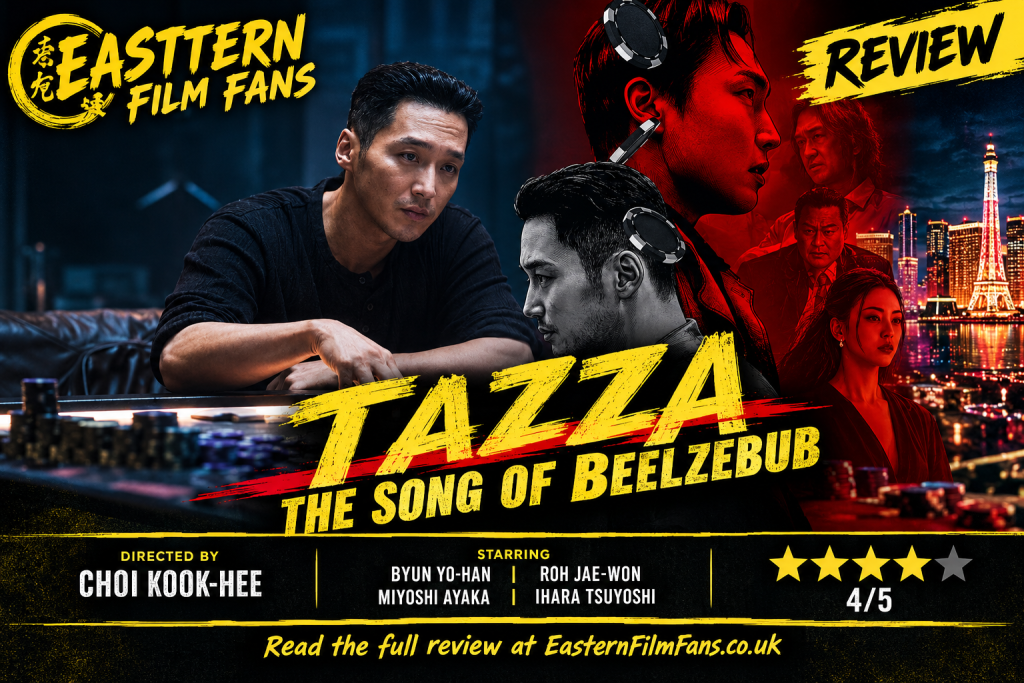
There is something irresistible about a good gambling thriller, particularly when friendship, greed, jealousy and revenge are all thrown into the pot. With Tazza: The Song of Beelzebub, director Choi Kook-hee takes us back into the dangerous world of professional gamblers for the fourth and final instalment in South Korea’s long-running Tazza film series. This time, the action centres on two former friends whose shared ambitions eventually turn into a bitter battle for revenge, with fortunes and lives hanging in the balance.
The Story
Jang Tae-young (Byun Yo-han) and Park Tae-young (Roh Jae-won) have been close friends since their school days. Sharing the same name but possessing very different strengths, the pair build a successful online casino business together. Jang has a natural gift for gambling, while Park relies on his intelligence, determination and hard work.
However, success brings its own problems. As Jang attracts more attention for his extraordinary luck, Park’s jealousy begins to grow, eventually pushing him towards a betrayal that leaves his former friend with nothing.
After surviving his devastating downfall, Jang sets out to rebuild his life and learn from legendary gambler Kwak Dong-wook (Jo Woo-jin). Their paths eventually cross again on the international poker circuit, where a high-stakes game offers Jang the opportunity to settle the score. With Kaneko (Miyoshi Ayaka), a Japanese businesswoman connected to the Yakuza, involved in the proceedings, this is a game where losing could cost considerably more than money.
What starts as a story about two friends building a business becomes a much darker examination of envy, ambition and the destructive consequences of allowing resentment to take control.
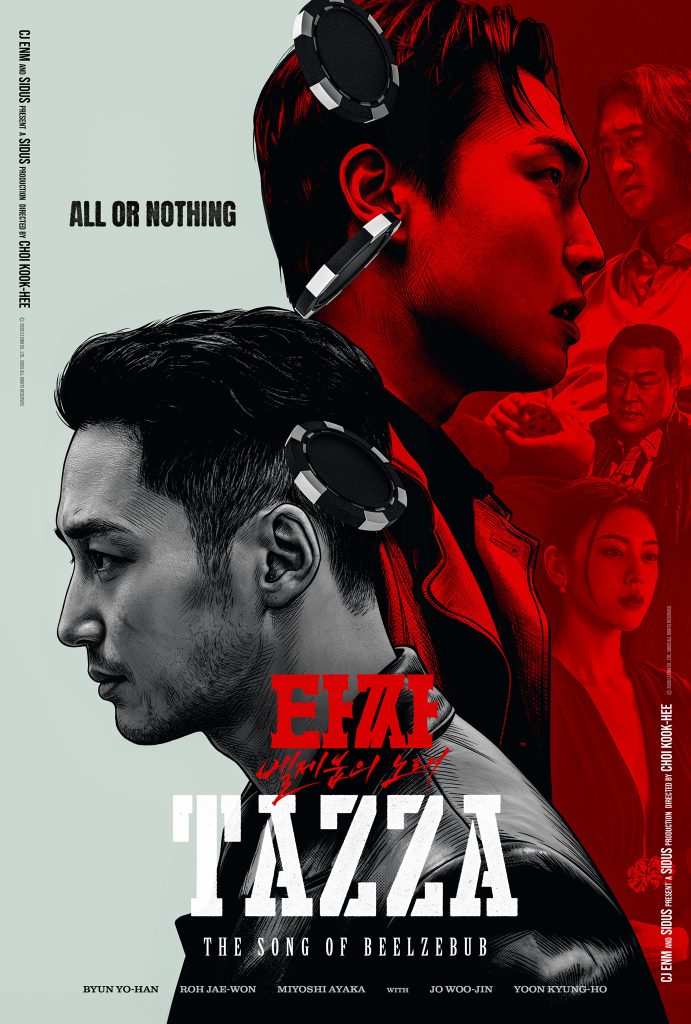
Director Choi Kook-hee
Choi Kook-hee takes the reins of the franchise, bringing his experience with very different genres to a film that balances crime, character drama and gambling suspense. His previous work includes Default, the financial crisis thriller, and Life Is Beautiful, a musical drama that demonstrated another side to his filmmaking.
Here, Choi focuses on the human emotions behind the gambling rather than relying solely on the mechanics of the games. The rivalry between Jang and Park gives the story its emotional backbone, making their eventual confrontation about far more than who has the better hand.
The international setting also helps give the film its own identity, moving the action beyond a familiar local gambling scene and into a world of powerful business interests, dangerous alliances and increasingly high stakes. The poker games provide the tension, but it is the personal history between the two central characters that gives the film its bite.
The Cast
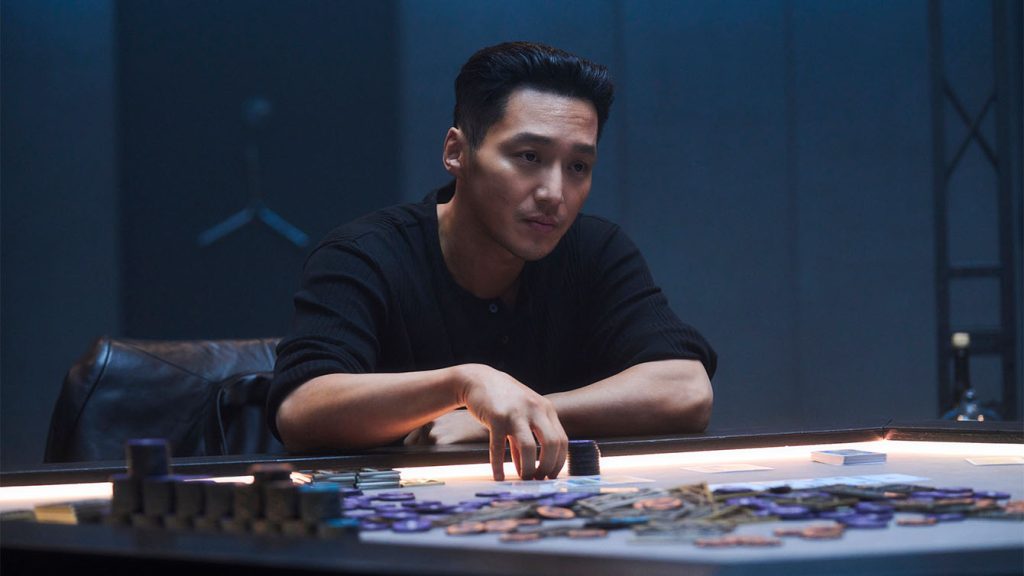
Byun Yo-han makes a compelling central figure as Jang Tae-young. His character has to recover from betrayal and find a way to turn his fortunes around, giving Byun plenty of opportunity to move between vulnerability, determination and the confidence of a man preparing for one final confrontation.
Roh Jae-won is equally important as Park Tae-young. This isn’t simply a case of a hero facing an obvious villain; Park’s resentment and desire to prove himself make the rivalry more personal. The shared history between the two men gives their conflict its weight, and the performances help maintain the tension as their relationship deteriorates.
Miyoshi Ayaka brings an intriguing presence as Kaneko. Her connections to the Japanese underworld introduce another layer of danger to the story, with the international gambling business offering opportunities for those prepared to exploit it.
Tsuyoshi Ihara adds further weight to the ensemble, helping reinforce the film’s wider criminal world. Alongside the supporting cast, these performances give the story a broader reach than a straightforward tale of revenge between two gamblers.
The film benefits from the contrast between its characters: some are driven by natural ability, others by ambition, and others by the power and influence that money can buy. In a world where everyone has an angle, trusting the wrong person can be just as dangerous as playing the wrong hand.
Do You Need to Watch the Previous Tazza Films?
One of the most welcome things about The Song of Beelzebub is that you don’t need to watch the earlier films to enjoy it. This fourth instalment tells a largely independent story with its own central characters, rivalry and revenge plot. Newcomers can jump straight in without worrying about missing essential background information.
For anyone interested in exploring the franchise, the previous films are:
Tazza: The High Rollers (2006) – The original film, directed by Choi Dong-hoon, introduces audiences to the dangerous world of Korean gambling through the story of an ambitious young gambler.
Tazza: The Hidden Card (2014) – Directed by Kang Hyoung-chul, this sequel brings a new generation of gamblers into the mix, with deception and double-crossing at the heart of the story.
Tazza: One Eyed Jack (2019) – Directed by Kwon Oh-kwang, the third film follows another group of gamblers as they come together for an elaborate and dangerous scheme.
Each film offers a different cast and its own gambling-centred story, drawing on the wider Tazza universe inspired by the comics created by Heo Young-man and Kim Se-young. Watching them in order is worthwhile if you want to appreciate the franchise’s evolution, but it isn’t a requirement here.
The Verdict
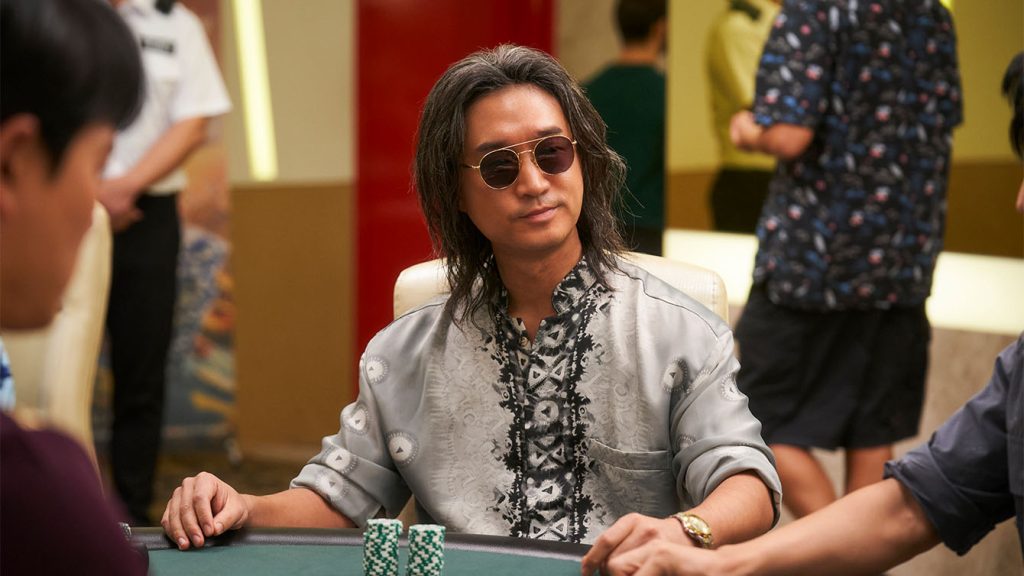
Tazza: The Song of Beelzebub delivers an entertaining return to a world where nobody can be trusted and every winning hand comes with a potential price. The central friendship-turned-rivalry provides a strong foundation, while the international gambling setting and criminal connections give the story plenty of scope to build its tension.
The strongest element is the personal conflict between Jang and Park. Their shared history makes the betrayal feel more significant than a simple business dispute, and the film understands that the most dangerous opponent is often the person who knows you best. Byun Yo-han and Roh Jae-won anchor the drama, while Miyoshi Ayaka and Tsuyoshi Ihara help round out the wider ensemble.
Although the story follows familiar crime-thriller territory at times, there is enough intrigue, tension and character-driven drama to keep the cards moving. Choi Kook-hee delivers a solid addition to the series, one that works for existing fans while remaining accessible to anyone discovering Tazza for the first time.
For fans of Korean crime cinema, gambling thrillers and stories of friendship destroyed by greed, this is a worthwhile watch.
Eastern Film Fans Rating: ★★★★☆ (4/5)
